
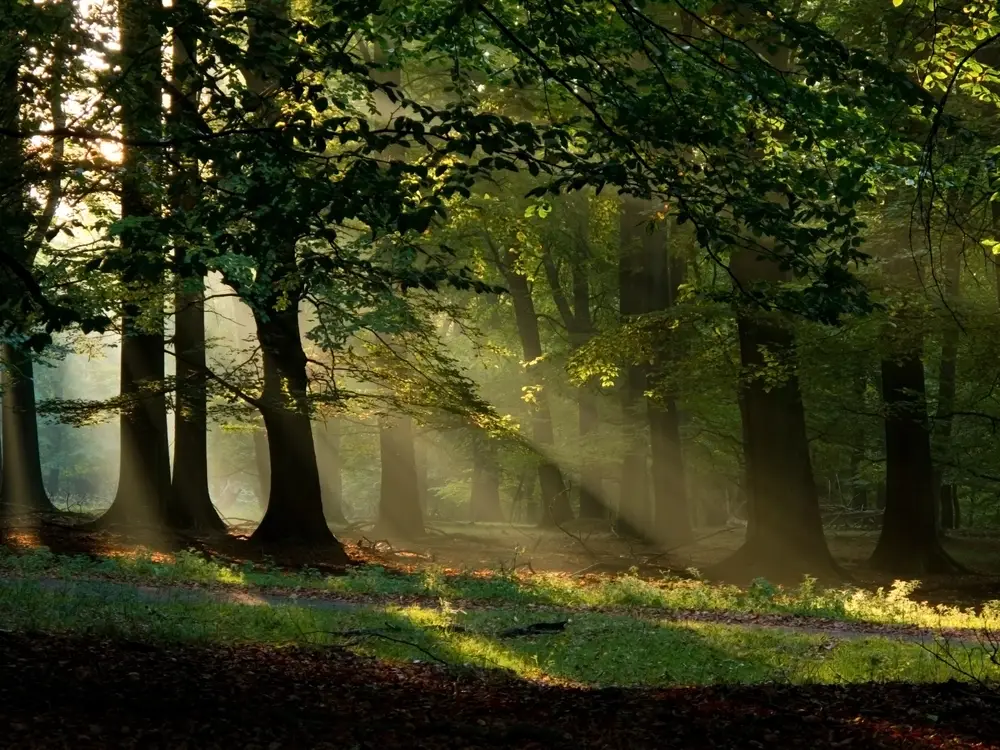
Pittsburgh, PA, Arborists Share Tips to Care for Your Trees
Could Your Tree Care Routine Be Doing More Harm than Good?
Pittsburgh’s neighborhoods are full of beautiful, mature trees—towering oaks, maples that blaze with fall color, evergreens that hold their shape all winter. But mixed in with all that beauty is a lot of bad tree advice. Some of it comes from well-meaning neighbors, some from old habits, and some from people who treat tree work like just another yard chore.
The problem? These myths don’t just cause a little extra cleanup. They can shorten a tree’s life, invite disease, or create serious safety risks around your home. Let’s clear up some of the most common misconceptions so you can make better decisions about tree care on your property.
Myth #1: “If the Tree Looks Fine, It Must Be Healthy and Safe”
A full canopy of green leaves isn’t the whole story. Many of the most serious problems start where you can’t easily see them: inside the trunk, underground in the roots, or high in the upper canopy.
A tree can be full and green and still have:
- Decay hidden behind seemingly solid bark.
- Roots damaged by construction, compacted soil, or past storms.
- Cracks or weak branch unions that only show up under heavy wind or ice.
That’s why an occasional tree risk assessment from a qualified arborist is so important, especially for big trees near houses, driveways, play areas, or power lines. A professional doesn’t just look at “green vs. brown,” they evaluate structure, root zone conditions, past pruning, and overall tree health before giving you the real picture.
Myth #2: “Topping a Tree Makes It Safer”
Topping, also known as cutting off the entire top of a tree or hacking big chunks out of the crown, is still surprisingly common, and it’s one of the fastest ways to ruin a tree.
At first glance, topping can feel like you’ve “fixed” the height problem. In reality, you’ve traded one kind of risk for several others. The tree loses a huge portion of its leaf surface, which means it’s suddenly under stress. In response, it sends out dozens of thin, fast-growing shoots just below the cuts. Those shoots are weakly attached and far more likely to break in future storms. The large wounds left behind also open the door to decay and disease.
If you’re worried about size, shade, or storm risk, the alternatives are proper structural pruning or, in some cases, tree removal, not topping. A reputable tree service company will never recommend topping as a “solution.”
Myth #3: “Anyone with a Chainsaw Can Handle Tree Trimming”
Tree work is one of those things that looks easier from the ground than it actually is. It’s not just about cutting off branches; it’s about understanding how those cuts affect the tree’s structure, balance, and health years down the line.
When someone without training trims trees, you tend to see the same problems:
- Branch stubs left behind that never properly seal.
- Flush cuts that remove the branch collar and slow healing.
- Lopsided canopies that catch more wind and are more prone to failure.
- Over-thinning or “lion’s tailing,” which leaves heavy weight at the ends of long, bare branches.
Professional tree pruning is done with a specific purpose: remove dead or hazardous wood, improve structure, and support long-term tree health. It’s also done with the right safety gear and rigging. For anything beyond small, low branches, hiring a qualified tree service is safer for you and your trees.
Myth #4: “More Mulch Is Always Better”
Mulch can be one of the best tools for supporting tree health, but only when it’s used correctly. Those tall “mulch volcanoes” you see piled up against trunks are not a sign of good care; they’re a sign someone doesn’t understand how roots and bark actually work.
When mulch is stacked too high and pressed against the trunk, it holds moisture where it shouldn’t, encouraging rot, insects, and girdling roots that wrap around the base instead of growing outward. Over time, that can weaken or kill the tree.
The fix is simple: spread mulch in a wide, even ring under the canopy, 2–3 inches deep, and pull it back a few inches from the trunk so the flare at the base is visible. Done this way, mulch helps the soil retain moisture, moderates temperature swings, and slowly improves soil structure—all good things for long-term tree care.
Myth #5: “Established Trees Don’t Need Any Care”
Once a tree is past the fragile sapling stage, it’s tempting to assume it can just take care of itself. In forests, that might be true. In Pittsburgh yards and streetscapes, where trees compete with sidewalks, compacted soil, road salt, and lawn equipment, it’s a different story.
Mature trees still feel the effects of:
- Repeated droughts or very wet years.
- Soil compaction from foot traffic, parking, or construction.
- Gradual root damage from trenching, new hardscape, or utility work.
- Road salt and pollution.
They may not show immediate, dramatic symptoms, but stress accumulates over time and can make trees more vulnerable to tree disease, pests, and storm damage.
A basic tree health care plan might include occasional deep watering during dry spells, soil improvement or aeration in compacted areas, and periodic tree pruning to remove deadwood and maintain structure. Think of it like preventive care, rather than waiting for a crisis.
Myth #6: “If a Branch Breaks, Just Cut It Off Wherever”
Storms happen, and broken limbs are part of life with trees. But how those broken branches are cleaned up can make a big difference in how well the tree recovers.
If you cut randomly, too far from the trunk, too close, or at the wrong angle, you can leave wounds that don’t close properly. That invites decay into the heartwood and weakens the tree over time.
Good pruning targets the branch back to its natural attachment point, just outside the branch collar (the slightly swollen area where the branch meets the trunk or larger limb). On big or high branches, that type of work is best handled by a professional who can safely make clean, correctly placed cuts.
Myth #7: “A Hollow or Cavity Means the Tree Has to Come Down”
Cavities and hollows definitely deserve attention, but they’re not an automatic reason for tree removal. Trees are remarkably good at compartmentalizing damage and can often remain stable with some internal decay, depending on where it is and how much sound wood remains.
An arborist evaluating a cavity will look at:
- How large the hollow area is compared to the total trunk diameter.
- Whether the remaining wood is sound and evenly distributed.
- How much weight that part of the tree is supporting.
- Other signs of decline or stress.
Sometimes, a tree with a cavity can be safely kept with monitoring and thoughtful pruning. In other cases, removal really is the most responsible option. The key is basing that decision on an actual assessment, not just the sight of a hole.
Myth #8: “There’s Always a Spray or Injection That Can Fix It”
When a tree starts to decline, it’s natural to hope for a quick treatment, a spray, an injection, something that will reverse the problem. While targeted treatments do exist for certain pests and diseases, they’re only effective when they match the actual issue and when the underlying conditions are addressed.
Many tree problems aren’t purely “disease” problems at all. They trace back to planting too deep, girdling roots, poor drainage, chronic overwatering, compacted soil, or years of improper pruning. If those root causes stay the same, most chemical fixes are temporary at best.
A good plant health care program starts with diagnosis: what’s stressing the tree, and can the environment or care be adjusted? Treatments are then used as one tool in a bigger plan—not the whole plan.
Myth #9: “You Only Need a Tree Service in an Emergency”
Calling a tree service company only when something has already fallen is like only seeing a doctor in the ER. You might solve the immediate problem, but you’ll miss chances to prevent the next one.
Regular, non-emergency visits are where the real value shows up. An arborist walking your property once every year or two can:
- Identify risky limbs or trees before they fail.
- Recommend smart tree pruning instead of reactionary cutting.
- Catch early signs of tree disease or decline.
- Help you plan for future removals and replacements rather than panic after a storm.
That doesn’t mean you need constant work done. Sometimes the best outcome from an inspection is the peace of mind that everything looks good.
Getting Tree Advice You Can Actually Trust
With so much conflicting information online and in the neighborhood, it helps to have a trusted source for tree questions. Look for tree care professionals who:
- Have arborist training or certifications.
- Take time to explain why they recommend certain steps.
- Focus on long-term tree health and safety, not just quick cosmetic fixes.
- Are willing to say “do nothing for now” when that’s truly the best option.
When you treat your trees as long-term assets, like your roof or foundation, you’re more likely to invest in the right things at the right time and avoid the expensive surprises.
About Greater Pitt Tree Service
Greater Pitt Tree Service helps Pittsburgh homeowners and property managers make sense of their trees: what’s healthy, what’s risky, and what’s worth investing in. Their team combines science-based tree care with practical, clear communication so you’re never left guessing. Whether you need pruning, a safety-focused tree risk assessment, or guidance on aging or problem trees, they can help you move past the myths and make smart choices for your landscape.