
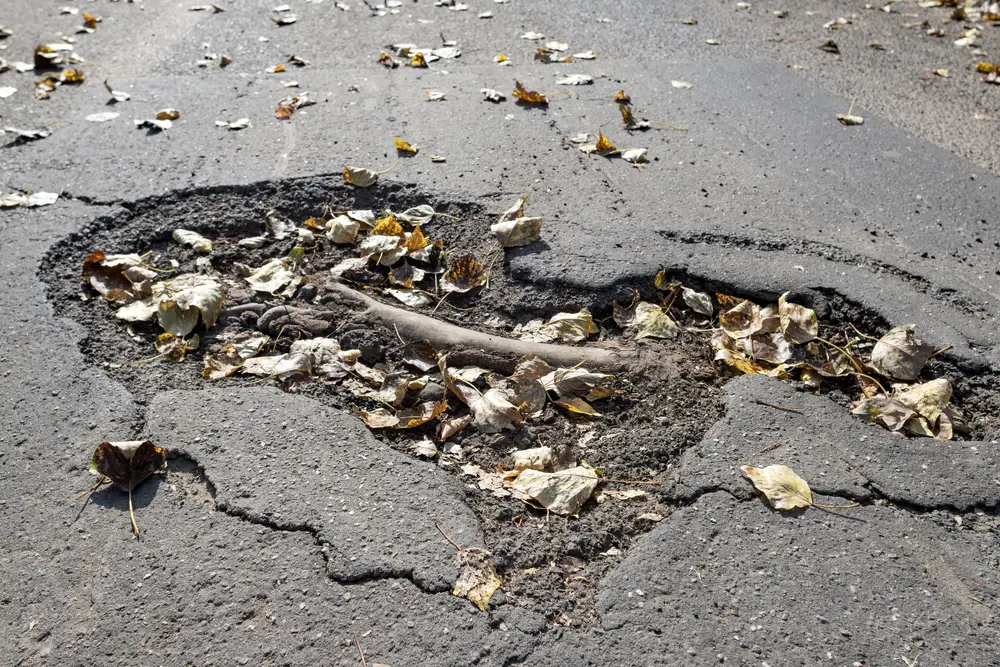
Tree service pros in Pittsburgh, PA, explain what’s happening under the concrete.
Protecting Your Home from Tree Roots
On the surface, your driveway might look like solid, unshakable concrete. But underneath, there’s a quiet tug-of-war going on between tree roots, soil, and your hardscape. One day, everything looks fine; the next year, you’re noticing hairline cracks, lifted slabs, or a trip hazard where things used to be level.
Is it just age? Or are your trees to blame? And more importantly, can you protect both your trees and your driveway (and foundation) without choosing one over the other?
Let’s break down what’s really going on under there, how to spot early warning signs, and which solutions actually work, with help from professional tree service practices that keep tree health and property safety in balance.
How Tree Roots Really Grow Near Your Driveway
It’s easy to picture roots as a deep, straight-down anchor. In reality, most tree roots grow out more than down, often extending one to two times the canopy spread and concentrating in the top 12–18 inches of soil. That shallow layer is where oxygen, water, and nutrients are most available.
When a driveway, sidewalk, or foundation is nearby, roots don’t attack the concrete. They simply keep growing in the only places that offer space, moisture, and air. In compacted or poorly aerated soil (which is common around construction), roots may grow right along the underside of slabs or against foundations, following tiny cracks or gaps.
A few things that encourage root problems around driveways:
- Tight planting spaces: Large trees planted in narrow strips between a driveway and house, or next to a sidewalk, rarely have enough room for natural root spread.
- Compacted fill soil: Construction often leaves dense fill soil that roots struggle to penetrate, so they end up pushing along the path of least resistance—right under hard surfaces.
- Changes in moisture: Poor drainage, gutter downspouts aimed at one area, or grading issues can pull roots toward driveways and foundations in search of water.
Over time, that pressure can start to lift sections of concrete, create uneven surfaces, and stress both your hardscape and your trees.
Early Signs Your Driveway and Roots Are Competing
Problems under your driveway usually start small—and by the time they’re obvious, repairs are often more involved. Watching for early warning signs gives you more options and can make it easier to protect both the tree and your property.
Keep an eye out for:
- Raised or uneven slabs. One corner of a driveway panel that sits higher than the others is often the first visible clue that roots are pressing up from below.
- Spiderweb or stair-step cracks. While some cracking is normal with age, cracks that widen or lift over time can point to root pressure or soil movement driven by roots and water.
- Gaps between concrete and soil. If you notice a hollow space near the edge, it may indicate soil displacement or roots pushing through.
- Exposed surface roots. Visible roots snaking along the edge of the driveway or pushing through nearby lawn areas indicate that the root system is close to the surface and to infrastructure.
A professional arborist or tree service company can take these surface clues and combine them with experience, knowledge of tree species, and soil conditions to evaluate what’s happening below ground without guesswork.
Can Roots Really Damage Your Foundation, Too?
Driveways usually show symptoms first because they’re thinner and more exposed than a home’s foundation. But in some situations, roots and foundations can affect each other as well.
Here’s how that can unfold:
- Indirect pressure via soil movement. Roots don’t typically “break” foundations on their own, but they can contribute to soil drying and shrinking (especially in clay soils) or concentrate moisture in certain areas. That expansion and contraction can increase stress on footings over time.
- Exploiting existing cracks. If there are already small cracks or gaps in older foundations, roots may follow those paths, enlarging them and allowing more water intrusion.
- Drainage changes. Roots that alter the grade or interfere with drainage can direct water toward the foundation instead of away from it, increasing hydrostatic pressure and the risk of seepage.
This is where tree health care and property protection overlap. A tree risk assessment by a qualified arborist focuses not just on whether a tree might fall, but also on how the root system interacts with structures, utilities, and the surrounding soil.
Smart Ways to Protect Your Trees & Home
The goal isn’t to declare war on your trees. It’s to manage root growth and hardscape together so you don’t end up with unsafe walkways, damaged vehicles, or unnecessary tree removal.
Some of the most effective strategies include:
1. Root-Zone Evaluation and Selective Root Pruning
Before anyone starts cutting roots, it’s critical to have a professional arborist evaluate which roots are structural (providing stability) and which are smaller, non-structural feeder roots. Removing the wrong roots can destabilize a tree or severely impact tree health.
With expert guidance, selective root pruning can sometimes reduce pressure on a driveway while preserving the tree’s stability and health.
2. Adjusting Driveway Design or Repair Approach
When it’s time to repair or replace damaged concrete, you don’t always have to put it back exactly as it was. In some cases, contractors can:
- Use smaller sections or flexible materials (like pavers in certain areas) that are more forgiving if roots grow or soil shifts.
- Slightly adjust the driveway route or width to give critical root zones more space.
- Improve base preparation and drainage to reduce the likelihood that roots will seek moisture right under the slab.
Collaborating between your tree service company and your concrete contractor can help you end up with a driveway that holds up better in the long term.
3. Root Barriers and Mulch Zones
In some situations, installing a properly placed root barrier—installed by a professional and not just “shoved into the ground”—can redirect roots deeper or away from the driveway.
Pair this with generous mulch rings around trees (instead of lawn right up to the trunk) to improve soil structure, reduce compaction, and keep roots healthier and more evenly distributed.
4. Future-Focused Tree Selection and Placement
If you’re planning new plantings near a driveway or future hardscape, this is the perfect time to get advice. An arborist can recommend:
- Tree species with root systems that are less aggressive near surfaces
- Appropriate spacing from driveways, walkways, and structures
- Ongoing tree trimming, tree pruning, and plant health care practices that support long-term stability
A little planning at the planting stage can prevent years of conflict between roots and concrete.
When It’s Time to Call a Tree Service Company in Pittsburgh
Some homeowners only reach out for tree service when a branch breaks or a tree is clearly dying. In reality, root and foundation concerns are exactly the kind of slow-moving issues that benefit from early, professional attention.
It’s a good idea to call an arborist or tree service company if:
- You see new or worsening cracks or lifting in the driveway near mature trees.
- You notice exposed roots or soil heaving close to hard surfaces.
- You’re planning a new driveway, patio, or addition near existing trees.
- You’re unsure whether a tree can be saved without damaging nearby structures.
About Greater Pitt Tree Service
Greater Pitt Tree Service provides professional tree care for homeowners and businesses throughout the Pittsburgh area, with a focus on safety, long-term tree health, and protecting the properties around them.
From root evaluations and tree risk assessments to pruning, removals, and plant health care, their certified arborists help you understand what’s happening above and below ground so you can make confident decisions about your trees. Call today to schedule a tree risk assessment.