
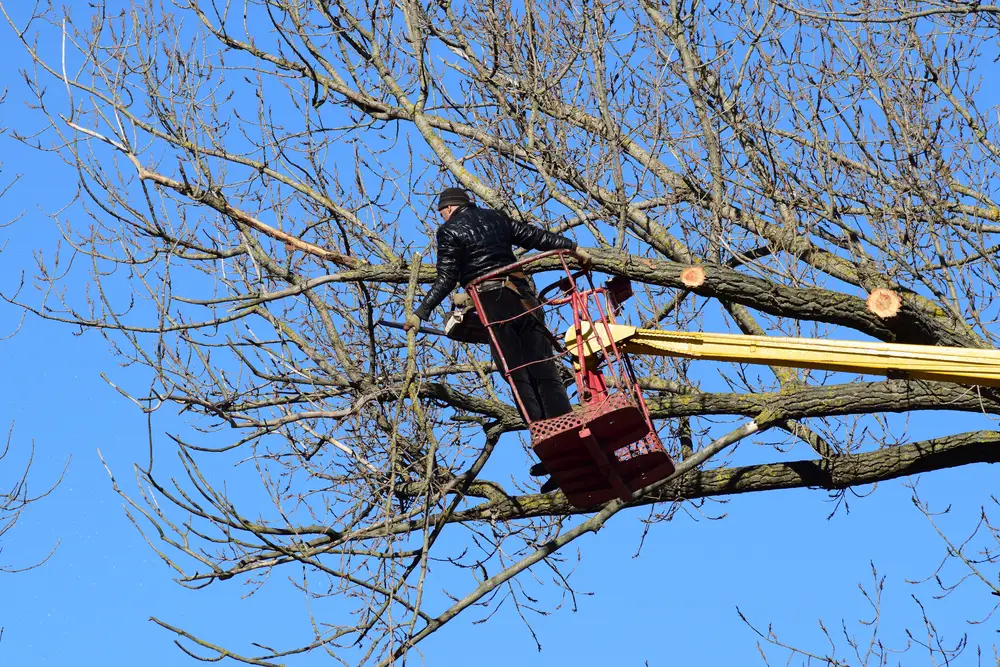
Pittsburgh, PA, Arborists Share Tips to Keep Your Trees Safe this Winter.
Can You Keep Your Trees Protected in Harsh Winters?
As fall settles in across Pittsburgh, most homeowners are busy raking leaves, shutting down outdoor faucets, and buttoning up their homes for the cold months ahead. But one part of your property that often gets overlooked is also one of the most valuable: your trees.
Cold snaps, heavy snow, ice, road salt, and winter winds can all take a toll on tree health, especially if a tree was already stressed going into the season. A little bit of proactive tree care in the fall can make the difference between a healthy, stable tree in the spring and a cracked trunk, broken limbs, or even a hazardous tree that needs emergency tree removal.
Here’s how to winterize your trees and get them ready for colder weather in the Pittsburgh area.
Start With a Winter Tree Checkup
Before you can protect your trees, it helps to know what shape they’re in right now. A simple visual inspection can tell you a lot, and in some cases, it may be worth bringing in a professional tree service company for a formal tree risk assessment.
Walk your property and look for:
- Dead or dying branches: Bare, brittle limbs, especially in the upper canopy, are more likely to snap under the weight of snow and ice.
- Cracks or splits in the trunk: Long vertical cracks, decay pockets, or peeling bark can indicate structural weakness.
- Leaning trees or exposed roots: A tree that’s recently started to lean or has heaving soil around the base may be unstable.
- Signs of tree disease or pests: Discolored leaves that never recovered in summer, oozing sap, sawdust at the base, or clusters of holes in the bark can signal deeper tree health problems.
If you’re not sure what you’re seeing or you’re worried about a tree near your home, driveway, or power lines, this is when an ISA-certified arborist can help. A professional arborist can perform a detailed tree risk assessment and let you know whether the tree is safe to keep, needs corrective tree pruning, or should be considered for tree removal before winter storms hit.
Why Tree Health Going Into Winter Matters
Trees don’t suddenly fail because it snowed once. Most winter damage results from pre-existing stress that went unnoticed all year: drought, compacted soil, untreated tree disease, past poor pruning, or root damage from construction.
When cold weather arrives, that stress shows up as:
- Branches that snap more easily under snow and ice.
- Reduced ability to fight off pests and disease.
- Increased risk of cracking during freeze/thaw cycles.
- Weakened root systems that can’t anchor the tree in high winds.
By improving tree health in the fall through proper watering, tree trimming, plant health care, and soil management, you’re giving your trees the reserves they need to handle harsh conditions.
Prune and Trim Before Heavy Snow Arrives
Thoughtful tree pruning is one of the best ways to prepare trees for winter, but it needs to be done correctly. The goal is not to strip the canopy; it’s to remove problem branches and improve structure so trees can better withstand snow, ice, and wind.
A few key principles:
- Remove dead, damaged, or crossing branches: These are the limbs most likely to break under snow or ice, especially when they rub against healthier branches.
- Thin heavy, overextended limbs near structures: Strategic tree trimming can reduce the weight on long branches that hang over your roof, driveway, or sidewalk.
- Avoid “topping” trees: Topping, or cutting large branches back to stubs, is harmful tree care. It leads to weak, fast-growing sprouts that are more likely to break in future storms.
For large trees or those growing near homes and power lines, it’s always safer to hire a professional tree service. Their crews have the training, equipment, and rope systems to prune safely without causing more damage to the tree or your property.
Protect Roots With Mulch and Moisture
Winter isn’t just hard on branches and bark—it can be tough on roots, too. In the Pittsburgh area, freeze/thaw cycles and dry winter winds can pull moisture from the soil and stress the root zone.
Simple steps to protect roots include:
- Mulching the root zone: A 2–3-inch layer of organic mulch (like wood chips) spread to the drip line helps insulate roots, regulate soil temperature, and hold moisture. Keep mulch a few inches away from the trunk to prevent rot.
- Watering before the ground freezes: If fall has been dry, a deep watering before consistent freezing temperatures arrive can help trees, especially young ones, enter winter with adequate moisture.
- Reducing soil compaction: Avoid driving or parking on tree roots, and limit heavy foot traffic near the base. Compacted soil restricts air and water movement, which can weaken tree health over time.
These steps fall under broader plant health care, preventive practices that support tree health and resilience rather than only reacting when something goes wrong.
Support Young, Newly Planted, and Sensitive Trees
Not all trees on your property face winter in the same way. Young trees, recently transplanted trees, and certain species are more vulnerable to cold, wind, road salt, and sunscald.
Consider extra protection for:
- Newly planted trees: They may still be establishing their root systems. Mulch, consistent moisture in fall, and sometimes staking (if recommended by an arborist) can help stabilize them.
- Thin-barked species: Some trees are prone to sunscald, bark damage caused by winter sun warming the trunk during the day, followed by rapid freezing at night. Wrapping trunks with breathable tree wrap for the coldest months can help.
- Evergreens near salted roads or driveways: Road salt can burn needles and roots. Burlap screens or careful snow placement (so plowed snow isn’t piled against them) can reduce salt exposure.
An arborist or tree care professional can recommend which of your trees warrant this extra level of protection and which products or methods are best for your yard.
When Winter Prep Means Removing a Tree
Sometimes, the safest way to “prepare” a tree for winter is to admit that it’s no longer safe to keep, especially if it’s standing over a home, garage, play area, or parking space.
You may want to talk to a tree service company about tree removal if:
- A large tree is clearly dead or mostly dead.
- The trunk is hollow, severely decayed, or split.
- The tree leans significantly, and the lean has recently worsened.
- Roots are lifting sidewalks, driveways, or soil around the base.
- Previous storms have already caused major structural damage.
Removing a failing tree before winter storms roll in can prevent far more costly damage to structures, vehicles, and nearby trees, and dramatically reduce the risk to people.
Creating a Tree Health Care Plan for the Year Ahead
Winterizing your trees isn’t just a one-time checklist; it can be the starting point for a longer-term tree health care plan. That might include:
- Annual or biannual tree inspection to monitor changes in structure and health.
- Regular, proper tree pruning to improve form and reduce risk.
- Soil testing, fertilization, and mulching as needed to support root health.
- Monitoring for early signs of tree disease or insect activity.
- Scheduling necessary tree trimming or tree removal work in safer, off-peak seasons.
Working with a professional tree service company means you don’t have to figure all of this out alone. An arborist can prioritize what matters most for your property and budget, whether that’s risk reduction, shade preservation, or long-term plant health care for mature trees.
About Greater Pitt Tree Service
Greater Pitt Tree Service provides professional tree care to homeowners and businesses throughout the Pittsburgh area, offering everything from expert tree pruning and tree trimming to tree health care, tree risk assessment, and safe tree removal when needed. If you’re unsure whether your trees are ready for winter or you’ve noticed signs of tree disease, dead branches, or declining tree health, our ISA-certified arborists are here to help.